The Art of a Slow Drive
Last weekend, I drove just south of Smyrna to spend the afternoon at Bombay Hook National Wildlife Refuge — and it was awesome.

Lately, I’ve been thinking about how rare it is to move slowly on purpose. We rush to get somewhere. We multitask at stoplights. Even our “downtime” tends to come with a side of scrolling. But there’s something quietly powerful about a slow drive — no agenda, no productivity attached to it, just the experience itself.
It was one of those bright winter afternoons when the sun tricks you into thinking it’s warmer than it is. The sky stretched wide and impossibly blue, the air had that sharp, icy edge, and a coat was still absolutely necessary. I wanted a change of scenery — just not the kind that required braving the full cold.
Bombay Hook turned out to be perfect.

The Beauty of Staying in the Car
The refuge has a 12-mile wildlife drive — a looping gravel road through tidal marsh, freshwater pools, and wide, open sky. You can stay in your car the entire time if you want.
Heat on. Windows up. Coffee in the cup holder.
And somehow, that felt like luxury.
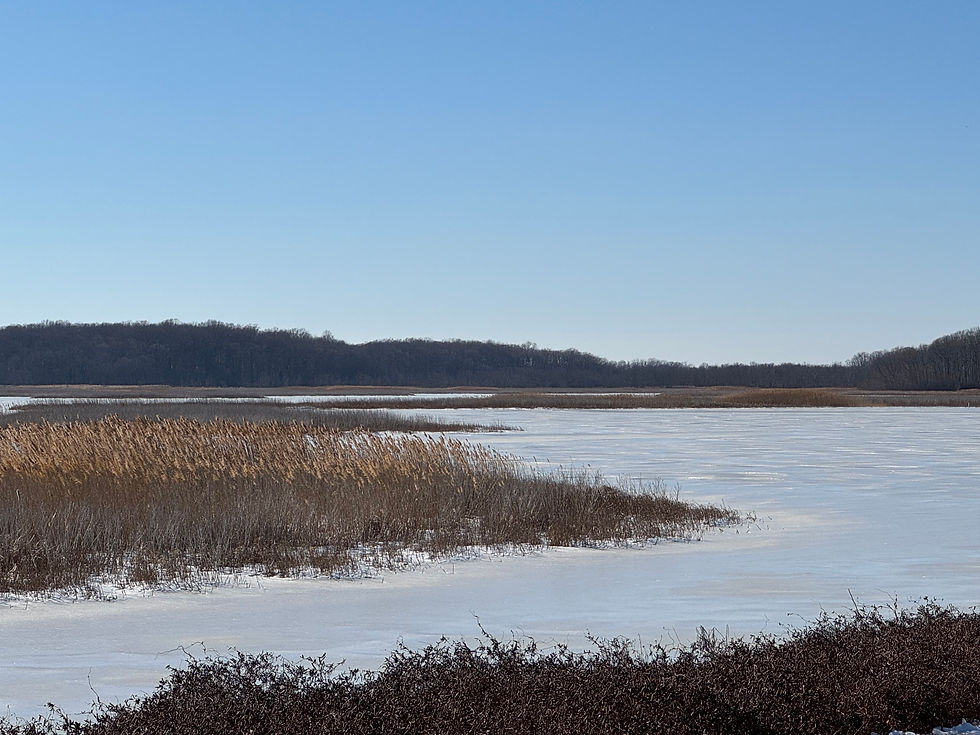
The drive isn’t about getting anywhere quickly. It’s about noticing. The way the marsh grasses bend in the wind. The way ice forms delicate patterns across the water’s surface. The way a great blue heron stands perfectly still, as if posing.
At one point, I realized I could physically feel my cortisol level decreasing. My shoulders softened. My breathing slowed. It felt like the landscape was quietly setting the pace — and I was finally following it.
On Nature’s Schedule
Because Bombay Hook sits along the Atlantic Flyway, birds move through constantly — especially in migration seasons. You might see ducks skimming across the water, flocks lifting off in unison, or a bald eagle overhead.
Some days are spectacular. Some are quieter.
Wildlife sightings can be a little hit-or-miss, depending on the day and season. It’s not a zoo — and that’s part of its beauty. You’re stepping into nature’s rhythm, not demanding a show.
Even on a slower day, though, the marsh itself is enough.
A Stop at the Visitor Center
Before starting the drive, we popped into the visitor center. It’s small but welcoming, with exhibits explaining the marsh ecosystem, bird migration patterns, and the refuge’s history. If you’re visiting with kids, it’s a helpful (and warm) place to begin — giving everyone context for what they’re about to see.
And yes, there are restrooms. Always worth mentioning.

A Little Planning Makes It Even Better
One thing to know: in late spring and summer, the biting flies and other insects can make an appearance.
Pro tip — especially if you’re going with kids: plan your visit before mid-May. Cooler months mean fewer insects and a much more comfortable experience.
Why It Stuck With Me
There’s something comforting about a place that simply exists — no spectacle required. Just marshland stretching toward the Delaware Bay and a gravel road inviting you to slow down.
Maybe that’s the art of a slow drive — letting the world be wide and quiet around you, and remembering you don’t always have to hurry through it.
Sometimes, you just need to drive south of Smyrna, roll along at 15 miles an hour, and let the marsh do its work.
Interested in visiting Bombay Hook? Find more here: Bombay Hook National Wildlife Refuge


Comments